




Can an LCR meter be used for high - voltage measurements?
 Nov 20, 2025|
 Can an LCR meter be used for high - voltage measurements?
Hey there! I'm a supplier of LCR meters, and I often get asked this question: Can an LCR meter be used for high - voltage measurements? Well, let's dig into this topic and find out.
First off, what's an LCR meter? For those who aren't in the know, an LCR meter is a device used to measure the inductance (L), capacitance (C), and resistance (R) of electronic components. It's a pretty handy tool in the electronics world, whether you're working on a small DIY project or in a big - time electronics manufacturing plant.
Now, when it comes to high - voltage measurements, things get a bit tricky. Most standard LCR meters are designed to work within a certain voltage range. This range is usually relatively low, often from a few millivolts up to a few volts. The reason for this is that the internal components of these meters are built to handle these lower voltage levels safely and accurately.
Let's take a look at some of the popular LCR meters we offer. The E4980A Agilent LCR Meter, 20 Hz - 2 MHz is a great example. It's a high - performance meter that can measure a wide range of frequencies, but its voltage rating is designed for normal, low - voltage applications. It's perfect for testing small capacitors, inductors, and resistors that you'd find in everyday electronic circuits.
Another one is the 4263B Agilent LCR Meter, 100 Hz To 100 KHz. This meter is also very reliable for basic LCR measurements. However, like the E4980A, it's not built to handle high - voltage situations. Using it for high - voltage measurements could not only give you inaccurate results but also damage the meter itself.
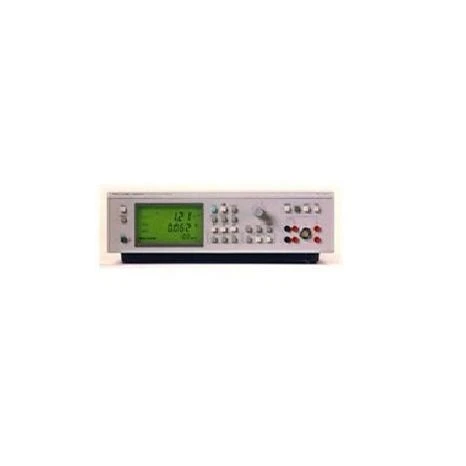
The PM6306 Fluke LCR Meter is yet another well - known LCR meter. It's known for its accuracy and ease of use. But again, it has its limitations when it comes to high - voltage scenarios.
So, why can't these meters handle high - voltage measurements? Well, high voltages can cause several problems. First of all, they can overload the internal circuits of the meter. The components inside the LCR meter, such as the amplifiers and analog - to - digital converters, are designed to work with specific voltage levels. When exposed to high voltages, these components can be damaged, leading to permanent malfunction of the meter.
Secondly, high voltages can introduce safety risks. If the meter isn't properly insulated or designed to handle high voltages, there's a risk of electric shock to the user. This is a serious concern, especially in a professional or industrial setting.
However, that doesn't mean you can never use an LCR meter for high - voltage measurements. There are specialized high - voltage LCR meters available. These meters are designed with high - voltage insulation, stronger internal components, and safety features to handle the increased voltage levels. They're more expensive and less common than standard LCR meters, but they're essential if you need to measure LCR values at high voltages.
When considering using an LCR meter for high - voltage measurements, you also need to think about the accuracy of the measurements. High - voltage environments can introduce electrical noise and interference, which can affect the accuracy of the LCR readings. Specialized high - voltage LCR meters are designed to minimize these effects and provide more accurate results.
In some cases, you might be able to use a voltage divider in combination with a standard LCR meter. A voltage divider is a simple circuit that reduces the voltage applied to the LCR meter. By using a voltage divider, you can bring the high voltage down to a level that the LCR meter can handle. However, this method has its limitations. The voltage divider itself can introduce errors, and it might not be suitable for all types of high - voltage measurements.

If you're in a situation where you need to measure LCR values at high voltages, it's important to do your research. Look for a high - voltage LCR meter that meets your specific requirements. Consider factors such as the maximum voltage it can handle, the frequency range, and the accuracy of the measurements.
As an LCR meter supplier, I'm here to help you make the right choice. Whether you need a standard LCR meter for low - voltage applications or a specialized high - voltage LCR meter, we have a wide range of options to suit your needs. If you're not sure which meter is right for you, don't hesitate to reach out. We can provide you with more information and guidance to ensure you get the best meter for your project.
In conclusion, while most standard LCR meters can't be used for high - voltage measurements, there are solutions available. Specialized high - voltage LCR meters are the way to go if you need accurate and safe high - voltage LCR measurements. And if you're in the market for an LCR meter, whether it's for high - voltage or low - voltage applications, we're here to assist you. Contact us to start the purchasing process and get the perfect LCR meter for your needs.
References
- Electronics textbooks on LCR measurements and high - voltage electronics.
- Manufacturer's specifications for E4980A Agilent LCR Meter, 4263B Agilent LCR Meter, and PM6306 Fluke LCR Meter.