




How are signals modulated for transmission?
 Jan 02, 2026|
 In the realm of modern communication, the efficient transmission of signals is of paramount importance. As a signal supplier deeply involved in this field, I am eager to share insights into how signals are modulated for transmission. This process is the cornerstone of various communication systems, enabling the seamless transfer of information across different media.

Understanding Signal Modulation
At its core, signal modulation is the process of altering one or more properties of a carrier signal in accordance with the information - bearing signal, also known as the modulating signal. The carrier signal is typically a high - frequency sinusoidal wave, while the modulating signal contains the actual data we want to transmit, such as voice, video, or digital information.
There are several reasons why modulation is necessary. Firstly, it allows for the efficient use of the electromagnetic spectrum. By shifting the frequency of the information - bearing signal to a higher range, multiple signals can be transmitted simultaneously in different frequency bands without interfering with each other. This is the principle behind frequency - division multiplexing (FDM), which is widely used in radio and television broadcasting.
Secondly, modulation improves the signal's ability to travel long distances. Low - frequency signals are more susceptible to attenuation and interference compared to high - frequency signals. By modulating a low - frequency signal onto a high - frequency carrier, we can take advantage of the better propagation characteristics of the carrier signal.
Types of Signal Modulation
1. Amplitude Modulation (AM)
Amplitude modulation is one of the simplest and oldest forms of signal modulation. In AM, the amplitude of the carrier signal is varied in proportion to the instantaneous amplitude of the modulating signal. Mathematically, if the carrier signal is given by (c(t)=A_c\cos(2\pi f_ct)) and the modulating signal is (m(t)), the AM - modulated signal (s(t)) can be expressed as:
(s(t)=A_c[1 + k_am(t)]\cos(2\pi f_ct))
where (A_c) is the amplitude of the carrier, (f_c) is the carrier frequency, (k_a) is the amplitude sensitivity, and (m(t)) is the message signal with a maximum amplitude of 1.
AM is widely used in radio broadcasting, especially for the medium - wave and short - wave bands. However, it has some drawbacks. It is relatively inefficient in terms of power usage, as a significant portion of the power is carried by the carrier, which does not carry any information. Additionally, it is more susceptible to noise and interference compared to other modulation techniques.
2. Frequency Modulation (FM)
In frequency modulation, the frequency of the carrier signal is varied in proportion to the instantaneous amplitude of the modulating signal. The FM - modulated signal (s(t)) can be written as:
(s(t)=A_c\cos\left(2\pi f_ct + k_f\int_{-\infty}^{t}m(\tau)d\tau\right))
where (k_f) is the frequency sensitivity.
FM offers several advantages over AM. It provides better noise immunity, as the information is encoded in the frequency variations rather than the amplitude. This results in a higher - quality audio signal, which is why FM is commonly used for high - fidelity radio broadcasting. However, FM requires a wider bandwidth compared to AM, which limits the number of channels that can be accommodated in a given frequency range.
3. Phase Modulation (PM)
Phase modulation is similar to frequency modulation, but instead of varying the frequency, the phase of the carrier signal is varied in proportion to the instantaneous amplitude of the modulating signal. The PM - modulated signal (s(t)) is given by:
(s(t)=A_c\cos\left(2\pi f_ct + k_pm(t)\right))
where (k_p) is the phase sensitivity.
PM is often used in digital communication systems, such as in phase - shift keying (PSK) and quadrature phase - shift keying (QPSK). These digital modulation techniques are highly efficient in terms of bandwidth utilization and are widely used in wireless communication systems, such as Wi - Fi and cellular networks.
Digital Signal Modulation
With the advent of digital technology, digital signal modulation has become increasingly important. Digital modulation techniques are designed to transmit digital data, which consists of discrete values (e.g., 0s and 1s).
1. Amplitude - Shift Keying (ASK)
ASK is a simple digital modulation technique where the amplitude of the carrier signal is switched between two levels to represent the binary digits 0 and 1. For example, a low - amplitude signal may represent 0, and a high - amplitude signal may represent 1.
2. Frequency - Shift Keying (FSK)
In FSK, the frequency of the carrier signal is switched between two or more values to represent different binary digits. For example, a lower frequency may represent 0, and a higher frequency may represent 1. FSK is relatively easy to implement and is used in some low - speed wireless communication applications, such as in remote control systems.
3. Phase - Shift Keying (PSK)
PSK is a more advanced digital modulation technique where the phase of the carrier signal is changed to represent different binary digits. In binary PSK (BPSK), the phase of the carrier is shifted by 180 degrees to represent the two binary values 0 and 1. Quadrature PSK (QPSK) uses four different phase states to represent two - bit combinations, which doubles the data rate compared to BPSK.
Advanced Modulation Techniques
In addition to the basic modulation techniques, there are also several advanced modulation techniques that have been developed to meet the increasing demands of modern communication systems.
1. Quadrature Amplitude Modulation (QAM)
QAM is a combination of amplitude and phase modulation. In QAM, both the amplitude and the phase of the carrier signal are varied simultaneously to represent multiple bits of data. For example, in 16 - QAM, 16 different combinations of amplitude and phase are used to represent four - bit combinations. QAM is widely used in high - speed digital communication systems, such as cable modems and digital television.
2. Orthogonal Frequency - Division Multiplexing (OFDM)
OFDM is a multi - carrier modulation technique that divides the available bandwidth into multiple orthogonal sub - carriers. Each sub - carrier is modulated independently using a digital modulation technique, such as QAM or PSK. OFDM is highly efficient in terms of bandwidth utilization and is resistant to multipath fading, which is a common problem in wireless communication. It is used in many wireless communication standards, including Wi - Fi, LTE, and digital audio broadcasting.
Testing and Measurement of Modulated Signals
As a signal supplier, we understand the importance of accurate testing and measurement of modulated signals. This ensures that the signals meet the required specifications and can be transmitted and received effectively.
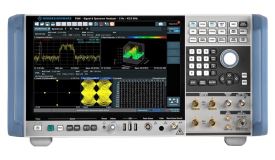
We offer a range of signal analyzers, such as the N9000A Agilent CXA Signal Analyzer, 9 KHz To 26.5 GHz, the FSW26 Rohde & Schwarz Signal and Spectrum Analyzer, 2 Hz - 26.5 GHz, and the FSW8 Rohde & Schwarz Signal and Spectrum Analyzer, 2 Hz - 8 GHz. These analyzers can measure various parameters of modulated signals, such as amplitude, frequency, phase, and modulation quality.
Conclusion
Signal modulation is a complex but essential process in modern communication systems. From the simple AM and FM techniques used in radio broadcasting to the advanced digital and multi - carrier modulation techniques used in high - speed wireless communication, the ability to modulate signals effectively is crucial for the seamless transfer of information.
As a signal supplier, we are committed to providing high - quality signal modulation solutions and testing equipment. Whether you are involved in radio broadcasting, wireless communication, or any other field that requires signal transmission, we have the expertise and products to meet your needs.
If you are interested in learning more about our signal modulation products or have any questions regarding signal transmission, we encourage you to contact us for a procurement discussion. Our team of experts is ready to assist you in finding the best solutions for your specific requirements.
References
- Haykin, S. (2001). Communication Systems. John Wiley & Sons.
- Proakis, J. G., & Salehi, M. (2007). Fundamentals of Communication Systems. Pearson Prentice Hall.
- Couch, L. W. (2013). Digital and Analog Communication Systems. Pearson.