




How do patterns relate to data mining?
 Jun 11, 2025|
 Patterns are fundamental elements in the realm of data mining, acting as the bridge between raw data and meaningful insights. As a pattern supplier, I've witnessed firsthand how patterns play a crucial role in extracting valuable information from vast datasets. In this blog, I'll explore the intricate relationship between patterns and data mining, shedding light on how our products can enhance the data mining process.
Understanding Patterns in Data Mining
Before delving into the relationship between patterns and data mining, it's essential to understand what patterns are in the context of data. A pattern can be defined as a recognizable regularity or trend within a dataset. These regularities can take various forms, such as sequences, associations, clusters, or anomalies. Patterns can be found in diverse types of data, including numerical, categorical, text, and time-series data.
In data mining, the goal is to discover these patterns in large datasets to gain insights, make predictions, and support decision-making. Patterns can reveal hidden relationships between variables, identify trends over time, and detect unusual behavior. For example, in a retail dataset, a pattern might show that customers who purchase diapers are also likely to buy baby wipes. This association pattern can be used by retailers to optimize product placement and marketing strategies.
Types of Patterns in Data Mining
There are several types of patterns that are commonly used in data mining. Each type of pattern has its own characteristics and applications.
Sequential Patterns
Sequential patterns are patterns that occur in a specific order. These patterns are often used in time-series analysis, where the order of events is important. For example, in a stock market dataset, a sequential pattern might show that a certain stock price increase is often followed by a decrease within a few days. Sequential patterns can be used to predict future events based on past sequences.
Association Patterns
Association patterns are patterns that show relationships between different items in a dataset. These patterns are commonly used in market basket analysis, where the goal is to identify items that are frequently purchased together. For example, an association pattern might show that customers who buy coffee are also likely to buy sugar and cream. Association patterns can be used to cross-sell products and improve customer satisfaction.

Cluster Patterns
Cluster patterns are patterns that group similar items together. These patterns are used in clustering analysis, where the goal is to partition a dataset into groups based on their similarity. For example, in a customer segmentation dataset, a cluster pattern might group customers based on their purchasing behavior, demographics, or preferences. Cluster patterns can be used to target specific customer segments with personalized marketing campaigns.
Anomaly Patterns
Anomaly patterns are patterns that represent unusual or abnormal behavior in a dataset. These patterns are often used in fraud detection, network intrusion detection, and quality control. For example, in a credit card transaction dataset, an anomaly pattern might detect a transaction that is significantly larger than the average transaction amount. Anomaly patterns can be used to identify potential fraud or security threats.
The Role of Patterns in Data Mining
Patterns play a crucial role in every stage of the data mining process, from data preprocessing to model evaluation.
Data Preprocessing
In the data preprocessing stage, patterns can be used to clean and transform the data. For example, patterns can be used to identify and remove missing values, outliers, and noise from the dataset. Patterns can also be used to normalize the data, making it easier to compare and analyze different variables.
Pattern Discovery
The pattern discovery stage is the core of the data mining process. In this stage, data mining algorithms are used to search for patterns in the dataset. There are several algorithms available for pattern discovery, including Apriori, FP-growth, and K-means. These algorithms use different techniques to find patterns based on the type of data and the desired pattern type.
Pattern Evaluation
Once patterns are discovered, they need to be evaluated to determine their significance and usefulness. Pattern evaluation involves measuring the quality of the patterns based on criteria such as support, confidence, and lift. Support measures the frequency of a pattern in the dataset, confidence measures the probability of a pattern occurring given the presence of certain items, and lift measures the strength of the association between items in a pattern.
Pattern Application
The final stage of the data mining process is pattern application. In this stage, the discovered patterns are used to make predictions, support decision-making, and solve real-world problems. For example, in a healthcare dataset, patterns might be used to predict the likelihood of a patient developing a certain disease based on their medical history and lifestyle factors. These predictions can be used by healthcare providers to develop personalized treatment plans.
Our Pattern Products for Data Mining
As a pattern supplier, we offer a range of products that can enhance the data mining process. Our products are designed to generate high-quality patterns that can be used for various data mining applications.
81141A Agilent Serial Pulse Data Generator, 7GHz
The 81141A Agilent Serial Pulse Data Generator is a high-performance instrument that can generate complex serial pulse patterns with a frequency of up to 7GHz. This generator is ideal for testing and validating high-speed serial interfaces, such as USB, Ethernet, and HDMI. The 81141A can generate patterns with a wide range of data rates, formats, and modulation schemes, making it suitable for a variety of applications.
81104A Agilent Pulse Generator, 80 MHz
The 81104A Agilent Pulse Generator is a versatile instrument that can generate precise pulse patterns with a frequency of up to 80MHz. This generator is commonly used in research, development, and production testing applications. The 81104A can generate patterns with a variety of pulse widths, amplitudes, and delays, allowing users to simulate different types of signals.
81134A Agilent Pulse Pattern Generator, Dual Ch., 3.35 GHz
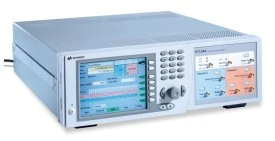
The 81134A Agilent Pulse Pattern Generator is a dual-channel instrument that can generate high-speed pulse patterns with a frequency of up to 3.35GHz. This generator is designed for testing and validating high-speed digital circuits, such as microprocessors, memory chips, and communication interfaces. The 81134A can generate patterns with a wide range of data rates, formats, and modulation schemes, making it suitable for a variety of applications.
Conclusion
Patterns are essential components of data mining, providing valuable insights and supporting decision-making. As a pattern supplier, we are committed to providing high-quality pattern products that can enhance the data mining process. Our products are designed to generate complex patterns with high precision and accuracy, making them suitable for a variety of applications.
If you are interested in learning more about our pattern products or discussing your data mining needs, please feel free to contact us. We would be happy to help you find the right solution for your business.
References
- Han, J., Kamber, M., & Pei, J. (2011). Data mining: Concepts and techniques. Morgan Kaufmann.
- Tan, P. N., Steinbach, M., & Kumar, V. (2006). Introduction to data mining. Pearson Education.
- Witten, I. H., Frank, E., & Hall, M. A. (2016). Data mining: Practical machine learning tools and techniques. Morgan Kaufmann.