




How does spectrum play a role in environmental science?
 Dec 18, 2025|
 Hey there! I'm a supplier of Spectrum products, and today I want to chat about how spectrum plays a crucial role in environmental science. It might not be the first thing that comes to mind when you think about saving the planet, but trust me, it's a big deal.
Let's start with the basics. Spectrum, in a nutshell, refers to the range of electromagnetic waves. This includes everything from radio waves to gamma rays. In environmental science, we're mainly interested in certain parts of the spectrum, like visible light, infrared, and ultraviolet. These different wavelengths can tell us a whole lot about what's going on in the environment.
One of the key areas where spectrum analysis is super useful is in monitoring air quality. You see, different pollutants in the air absorb and emit light at specific wavelengths. By using spectrum analyzers, we can detect these unique signatures and figure out what kinds of pollutants are present, and how much of them there are. For example, gases like carbon monoxide, nitrogen dioxide, and sulfur dioxide all have their own distinct absorption patterns in the infrared part of the spectrum.
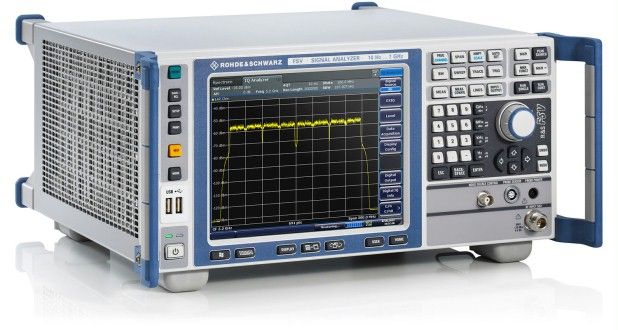
Take a look at FSV13 Rohde & Schwarz Signal and Spectrum Analyzer, 13.6 GHz. This bad boy can accurately measure these absorption patterns, helping us to keep tabs on air quality in real - time. It's like having a super - sensitive nose for pollutants!
Another important application is in studying water quality. Just like in the air, substances in water can absorb and scatter light in characteristic ways. By shining light of different wavelengths through a water sample and analyzing the spectrum of the transmitted or scattered light, we can detect things like algae blooms, heavy metals, and other contaminants. Algae, for instance, absorb light in the blue and red parts of the spectrum due to the presence of chlorophyll. By measuring these absorption peaks, we can estimate the amount of algae in the water, which is crucial for understanding the health of aquatic ecosystems.
The FSU3 Rohde & Schwarz Spectrum Analyzer, 20 Hz - 3.6 GHz is great for this kind of work. It can handle a wide range of frequencies, allowing us to analyze the complex interactions between light and water molecules and contaminants.
Spectrum analysis also plays a huge role in remote sensing of the Earth's surface. Satellites equipped with sensors that can detect different parts of the spectrum can provide us with a bird's - eye view of the planet. For example, in the visible part of the spectrum, we can see changes in land use, like deforestation or urban expansion. In the infrared, we can monitor the temperature of the land and oceans. This data is essential for understanding climate change and its impacts.

The E4446A Agilent Spectrum Analyzer 3 Hz - 44 GHz (PSA Series) is a high - performance tool that can be used in both ground - based and satellite - based applications. It can pick up even the smallest signals, giving us detailed information about what's happening on our planet's surface.
In addition to these, spectrum analysis is also used in studying the ozone layer. Ozone absorbs ultraviolet light, and by measuring the amount of UV light that reaches the Earth's surface, we can monitor the thickness and health of the ozone layer. This is super important because a depleted ozone layer allows more harmful UV radiation to reach us, which can cause skin cancer, cataracts, and damage to crops and marine life.
Now, you might be wondering how all this technology actually works. Well, spectrum analyzers work by taking in a signal, which could be light, radio waves, or even sound in some cases. They then break this signal down into its individual frequency components. This is a bit like taking apart a musical chord to see which individual notes make it up. Once we have the frequency components, we can analyze them to learn more about the source of the signal.
As a Spectrum supplier, I've seen firsthand how these tools are making a difference in environmental science. They're helping researchers to gather more accurate data, which in turn leads to better - informed decisions about environmental protection and management.
If you're involved in environmental science research, whether it's at a university, a government agency, or a private research firm, chances are you could benefit from having access to high - quality spectrum analysis equipment. Our products are known for their reliability, accuracy, and ease of use. We offer a wide range of spectrum analyzers that can meet the different needs of various research projects.
Whether you're looking to monitor air quality in a city, study the health of a lake, or analyze satellite data for climate research, we've got you covered. And we're not just about selling the equipment. We also provide excellent customer support, including training and technical assistance. So you can be sure that you'll be able to get the most out of your spectrum analyzer.
If you're interested in learning more about our Spectrum products and how they can be used in your environmental science projects, don't hesitate to reach out. We're always happy to have a chat, answer your questions, and discuss how we can help you achieve your research goals. You can contact us to start a purchasing discussion and find the perfect spectrum analyzer for your needs.
In conclusion, spectrum analysis is an incredibly powerful tool in environmental science. It allows us to see things that are otherwise invisible, giving us a better understanding of the environment and how it's changing. And as a Spectrum supplier, I'm excited to be a part of this important field, helping to make the planet a better place through technology.
References
- Environmental Science textbooks on spectroscopy and remote sensing
- Journal articles on the application of spectrum analysis in air, water, and ozone layer monitoring