




In which industries are LCR meters commonly used?
 Jun 18, 2025|
 LCR meters, which measure inductance (L), capacitance (C), and resistance (R), are indispensable tools in various industries. As an LCR meter supplier, I have witnessed firsthand how these instruments play a crucial role in ensuring the quality and performance of electronic components and systems. In this blog post, I will explore the industries where LCR meters are commonly used and discuss the specific applications within each sector.
Electronics Manufacturing
The electronics manufacturing industry is one of the primary users of LCR meters. These meters are used to test and validate the electrical properties of electronic components such as capacitors, inductors, and resistors. During the production process, LCR meters are used to ensure that the components meet the specified electrical parameters. For example, a capacitor's capacitance value needs to be within a certain tolerance range. An LCR meter can quickly and accurately measure the capacitance, allowing manufacturers to identify and reject components that do not meet the standards.
In addition to component testing, LCR meters are also used in the assembly and testing of printed circuit boards (PCBs). PCBs contain numerous electronic components, and any deviation in the electrical properties of these components can affect the overall performance of the board. By using an LCR meter, manufacturers can test the components on the PCB before and after assembly to ensure that the board functions correctly. For instance, an LCR meter can be used to measure the impedance of a trace on the PCB, which is crucial for high - speed signal transmission.
Our company offers a range of high - quality LCR meters suitable for electronics manufacturing. The E4980A Agilent LCR Meter, 20 Hz - 2 MHz is a popular choice in this industry. It provides accurate measurements over a wide frequency range, making it ideal for testing a variety of electronic components.

Telecommunications
In the telecommunications industry, LCR meters are used for several important applications. One of the key areas is the testing of RF (radio frequency) components. RF components such as filters, oscillators, and antennas have specific impedance and resonance characteristics that need to be carefully controlled. An LCR meter can measure the inductance, capacitance, and resistance of these components, which are essential parameters for determining their performance.
For example, in the design and production of mobile phone antennas, an LCR meter is used to measure the impedance of the antenna at different frequencies. This information is used to optimize the antenna's design and ensure that it can efficiently transmit and receive signals. Telecommunications companies also use LCR meters to test the performance of transmission lines. By measuring the characteristic impedance of the transmission line, they can ensure that there is minimal signal loss and distortion during transmission.
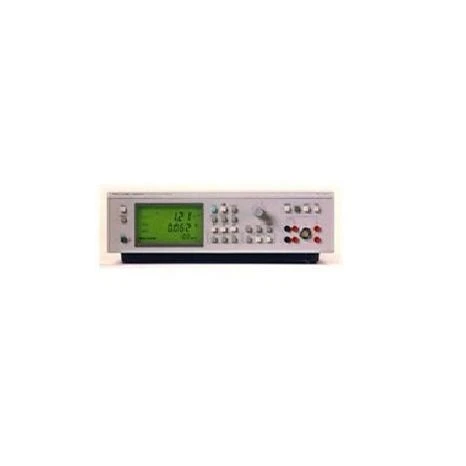
The PM6306 Fluke LCR Meter is well - suited for telecommunications applications. It offers high - precision measurements and can operate at frequencies relevant to RF testing, allowing telecom engineers to accurately characterize RF components and transmission lines.
Automotive
The automotive industry has seen a significant increase in the use of electronic systems in recent years. From engine control units to infotainment systems, electronic components play a vital role in modern vehicles. LCR meters are used to test these components to ensure their reliability and performance.
In the production of automotive sensors, such as temperature sensors and pressure sensors, LCR meters are used to measure the electrical properties of the sensing elements. This helps in ensuring that the sensors provide accurate readings. For example, a capacitance - based pressure sensor's capacitance value changes with the applied pressure. An LCR meter can measure this capacitance change accurately, allowing manufacturers to calibrate and test the sensors.
Automotive battery management systems also rely on LCR meters. These systems need to monitor the state of charge and health of the battery. By measuring the internal resistance of the battery using an LCR meter, the battery management system can estimate the battery's state of charge and detect any potential issues.
Our 4263B Agilent LCR Meter, 100 Hz To 100 KHz is a great option for automotive applications. Its frequency range is suitable for testing many of the electronic components used in vehicles, and its high - accuracy measurements ensure the quality and reliability of automotive electronics.
Power Generation and Distribution
In the power generation and distribution industry, LCR meters are used to test electrical equipment such as transformers, capacitors, and inductors. Transformers are essential for stepping up or stepping down the voltage in power systems. The performance of a transformer is closely related to its inductance and impedance. An LCR meter can measure these parameters to ensure that the transformer operates efficiently and safely.
Capacitors are used in power factor correction systems to improve the efficiency of power transmission. By measuring the capacitance of these capacitors using an LCR meter, power companies can ensure that the power factor correction is effective. Inductors are also used in various power circuits, and an LCR meter can be used to verify their electrical properties.
LCR meters are also used for preventive maintenance in power plants and substations. Regular testing of electrical components using an LCR meter can help identify potential faults before they cause major problems, reducing downtime and maintenance costs.
Research and Development
In research and development laboratories, LCR meters are used for a wide range of applications. Scientists and engineers use these meters to study the electrical properties of new materials and develop new electronic devices. For example, in the field of nanotechnology, researchers may use an LCR meter to measure the electrical properties of nanoscale materials such as carbon nanotubes or graphene.
In the development of new battery technologies, LCR meters are used to study the internal resistance and capacitance of experimental batteries. This information is crucial for improving the performance and lifespan of the batteries.
Medical Equipment
The medical equipment industry also benefits from the use of LCR meters. In the production of medical sensors, such as ECG electrodes and blood glucose sensors, LCR meters are used to ensure the accuracy and reliability of these sensors. For example, an ECG electrode's impedance needs to be within a certain range to accurately measure the electrical activity of the heart. An LCR meter can be used to test this impedance.
Medical imaging equipment such as MRI machines also rely on electronic components. LCR meters are used to test these components to ensure that the imaging equipment operates correctly and provides high - quality images.
Conclusion
As we have seen, LCR meters are widely used in a variety of industries, from electronics manufacturing to medical equipment. Their ability to accurately measure inductance, capacitance, and resistance makes them essential tools for ensuring the quality, performance, and reliability of electronic components and systems.
If you are in need of an LCR meter for your industry, we are here to help. Our company offers a wide range of LCR meters with different features and specifications to meet your specific requirements. Whether you are a large - scale manufacturer or a research institution, we can provide you with the right LCR meter solution. Contact us today to start a discussion about your procurement needs, and let us help you find the perfect LCR meter for your applications.
References
- [Some standard textbooks on electrical measurement and instrumentation]
- Industry - specific research papers on the use of LCR meters in different sectors