




What is the place of patterns in English language research?
 Jul 02, 2025|
 Patterns play a super crucial role in English language research, and as a pattern supplier, I've seen firsthand how these patterns impact the field. In this blog, I'll dig into what place patterns hold in English language research and why they matter so much.
First off, let's talk about what patterns are in the context of the English language. Patterns can be anything from grammatical structures, like subject - verb - object arrangements in sentences, to recurring vocabulary usage in certain contexts. For example, in business English, you often see patterns like "in order to" followed by a verb, which is used to express purpose. These patterns are like the building blocks of the language. They give it structure and predictability, making it easier for learners to understand and for researchers to analyze.
In language acquisition research, patterns are gold. When kids learn English, they start picking up on patterns early on. They notice that adding "-ed" to the end of a regular verb usually makes it past tense. This is a simple yet fundamental pattern. Researchers study how learners recognize, internalize, and use these patterns over time. By understanding these processes, we can develop better teaching methods. For instance, we can create materials that focus on high - frequency patterns, helping learners get a solid foundation in the language faster.
In corpus linguistics, patterns are at the heart of the research. A corpus is a large collection of texts, and by analyzing these texts, linguists can find all sorts of patterns. They can see which words are often used together, known as collocations. For example, "make a decision" is a common collocation. These patterns can tell us a lot about how the language is actually used in real - life situations. It's not just about what's grammatically correct but what native speakers actually say. As a pattern supplier, I provide tools and resources that can help researchers analyze these patterns in corpora more effectively.
Now, let's shift gears and talk about how patterns relate to my work as a pattern supplier. I offer a range of products that are essential for generating and analyzing patterns. For example, the 81142A Agilent Serial Pulse Data Generator, 13.5GHz is a powerful tool. It can generate complex patterns of electrical signals, which are useful in various research applications, including those related to language processing. In the field of speech technology, for instance, these patterns can be used to simulate different speech signals for testing algorithms.

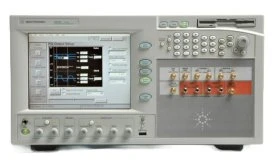
Another great product is the 81104A Agilent Pulse Generator, 80 MHz. This generator can produce precise pulse patterns, which are valuable in research related to signal processing. In language research, signal processing techniques are used to analyze speech patterns, such as intonation and rhythm. These patterns can reveal a lot about the emotional content and emphasis in speech.
The DG535 Stanford Research Digital Delay / Pulse Generator, 4 Ch. is also a fantastic tool. It allows for the creation of delayed and synchronized pulse patterns. In language research, this can be used to study the timing of speech production and perception. For example, researchers can use it to understand how pauses and rhythm in speech affect comprehension.
Patterns also have a place in discourse analysis. When we look at how people communicate in conversations or written texts, we find patterns in the way they structure their ideas. For example, in academic writing, there's often a pattern of introducing a topic, presenting evidence, and then drawing a conclusion. These patterns help us understand how information is organized and conveyed in different contexts. As a pattern supplier, I understand the importance of these patterns and how they can be studied using advanced tools.
In machine learning for natural language processing (NLP), patterns are key. Algorithms are trained to recognize patterns in text data. For example, a sentiment analysis algorithm looks for patterns in words and phrases that indicate positive or negative sentiment. By providing accurate pattern - generating tools, I can support the development of more advanced NLP models. These models can be used for tasks like language translation, chatbots, and text summarization.
Patterns in English language research are not just about the words and grammar. They also extend to cultural and social aspects. For example, certain patterns of speech are associated with different social groups or regions. Slang and idiomatic expressions are patterns that are unique to specific cultures or generations. Studying these patterns can help us understand the cultural and social context in which the language is used.
As a pattern supplier, I'm always looking for ways to improve my products and services. I work closely with researchers to understand their needs and develop solutions that can help them discover new patterns in the English language. Whether it's a new type of pattern - generating algorithm or a more user - friendly interface for analyzing patterns, I'm committed to supporting the research community.
If you're involved in English language research and are looking for high - quality pattern - related products, I'd love to hear from you. Whether you're studying language acquisition, corpus linguistics, discourse analysis, or any other area, my products can provide the support you need. Get in touch to start a conversation about your research needs and how I can help.
References
Crystal, D. (2003). A Dictionary of Linguistics and Phonetics. Blackwell Publishing.
Granger, S., Dagneaux, E., & Meunier, F. (2002). Corpus - Based Studies of English as a Foreign Language. John Benjamins Publishing Company.
McEnery, T., & Wilson, A. (2001). Corpus Linguistics. Edinburgh University Press.