




How can spectrum be used in quality control of materials?
 Jan 08, 2026|
 Hey there! As a spectrum supplier, I'm super stoked to chat with you about how spectrum can be used in quality control of materials. It's a topic that's not only fascinating but also crucial in a whole bunch of industries.
Let's start by getting a basic understanding of what spectrum is. In simple terms, spectrum refers to the distribution of electromagnetic radiation according to frequency or wavelength. Different materials interact with electromagnetic radiation in unique ways, and by analyzing these interactions, we can learn a whole lot about the material's properties.
One of the most common ways to use spectrum in quality control is through spectroscopy. Spectroscopy is the study of the interaction between matter and electromagnetic radiation. There are several types of spectroscopy, each with its own set of applications in material quality control.
For instance, infrared (IR) spectroscopy is widely used to identify and analyze the chemical bonds in a material. Different chemical bonds absorb infrared radiation at specific wavelengths. By measuring the absorption pattern, we can determine the types of bonds present in the material. This is incredibly useful in industries like pharmaceuticals, where the exact chemical composition of a drug needs to be verified. If a batch of pills has an unexpected absorption pattern in the IR spectrum, it could indicate a problem with the manufacturing process or a contamination issue.
Another important type of spectroscopy is ultraviolet - visible (UV - Vis) spectroscopy. This technique is based on the absorption of ultraviolet and visible light by molecules. Many organic compounds and some inorganic ones absorb light in this range. In the food industry, UV - Vis spectroscopy can be used to measure the concentration of certain components in a food product. For example, the amount of vitamins or pigments in a juice can be determined by analyzing its UV - Vis spectrum. If the spectrum shows a lower than expected absorption for a particular vitamin, it might mean that the juice doesn't meet the required quality standards.
Raman spectroscopy is also a powerful tool in material quality control. It works by measuring the inelastic scattering of light by molecules. Raman spectra provide information about the molecular structure and symmetry of a material. In the semiconductor industry, Raman spectroscopy can be used to detect defects in silicon wafers. A defective wafer will have a different Raman spectrum compared to a high - quality one, allowing manufacturers to quickly identify and discard faulty products.

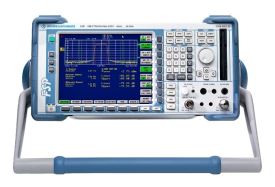
Now, let's talk about the equipment we use to analyze these spectra. At our company, we offer a range of top - notch spectrum analyzers. One of our popular products is the FSP3 Rohde & Schwarz Spectrum Analyzer, 9 KHz - 3 GHz. This analyzer is great for a wide variety of applications, especially when you need to analyze signals in the lower frequency range. It has high sensitivity and excellent frequency accuracy, which are essential for accurate quality control measurements.
If you're dealing with higher frequency signals, we also have the FSU43 Rohde & Schwarz Spectrum Analyzer 20 Hz - 43 GHz and the FSU50 Rohde & Schwarz Spectrum Analyzer 20 Hz - 50 GHz. These analyzers are designed to handle the most demanding frequency analysis tasks. They offer high - resolution measurements and can detect even the smallest variations in the spectrum, making them ideal for industries like telecommunications and aerospace, where signal quality is of utmost importance.
In addition to spectroscopy, spectrum analysis can also be used in non - destructive testing (NDT) of materials. For example, ultrasonic testing uses high - frequency sound waves to detect internal flaws in a material. The ultrasonic waves are sent through the material, and any changes in the wave pattern can indicate the presence of cracks, voids, or other defects. By analyzing the frequency spectrum of the reflected ultrasonic waves, we can determine the size, location, and nature of the defect. This is crucial in industries like automotive and construction, where the integrity of materials is vital for safety.
In the field of materials science, spectrum analysis can help in monitoring the aging process of materials. Over time, materials can undergo chemical and physical changes due to factors like exposure to heat, light, and moisture. By regularly analyzing the spectrum of a material, we can track these changes. For example, in the paint industry, the spectrum of a painted surface can change as it ages and fades. By comparing the spectra of a new paint job and an old one, manufacturers can develop better - quality paints that are more resistant to aging.
When it comes to implementing spectrum - based quality control in a manufacturing process, it's important to have a well - defined protocol. First, you need to establish a baseline spectrum for a high - quality sample of the material. This baseline serves as a reference for all future measurements. Then, during the production process, samples are taken at regular intervals and their spectra are analyzed. Any significant deviations from the baseline spectrum are investigated further.
It's also crucial to train your staff on how to use the spectrum analyzers properly. They need to understand the principles of spectroscopy and how to interpret the spectra correctly. Regular calibration of the equipment is also essential to ensure accurate and reliable results.
In conclusion, spectrum analysis is an incredibly valuable tool in material quality control. It allows us to detect problems early in the manufacturing process, ensuring that only high - quality products reach the market. Whether you're in the pharmaceutical, food, semiconductor, or any other industry that relies on precise material properties, spectrum - based quality control can make a huge difference.
If you're interested in learning more about how our spectrum analyzers can help you with your material quality control needs, or if you want to discuss a potential purchase, don't hesitate to reach out. We're always happy to have a chat and see how we can assist you in improving your product quality.
References
- "Introduction to Spectroscopy" by Donald L. Pavia, Gary M. Lampman, George S. Kriz, and James A. Vyvyan.
- "Non - Destructive Testing Handbook" edited by Paul C. Ndebele.
- "Materials Science and Engineering: An Introduction" by William D. Callister Jr. and David G. Rethwisch.