




What is the spectrum of a star?
 Jan 07, 2026|
 What is the spectrum of a star? This question has intrigued astronomers and stargazers alike for centuries. In the modern era, the study of stellar spectra not only deepens our understanding of the universe but also has practical implications for various scientific and commercial applications. As a Spectrum supplier, I am excited to delve into the fascinating world of stellar spectra and also introduce our range of high - quality spectrum analyzers.
Understanding the Basics of Stellar Spectra
Stellar spectra are the fingerprints of stars. When we observe a star, the light that reaches us is a complex mixture of different wavelengths. By dispersing this light using a prism or a grating, we can break it down into its component colors, which form a spectrum. There are three main types of stellar spectra: continuous, emission, and absorption spectra.
A continuous spectrum is a smooth, unbroken band of colors, similar to the rainbow we see after a rainstorm. It is produced by a hot, dense object like a star's core. The atoms in the core are so closely packed that they interact with each other in a way that allows for a continuous emission of light across a wide range of wavelengths.
Emission spectra, on the other hand, consist of bright lines against a dark background. These lines are produced when atoms in a low - density gas are excited, usually by heat or radiation. As the excited atoms return to their lower energy states, they emit light at specific wavelengths, creating the distinct lines in the spectrum.
Absorption spectra are perhaps the most commonly observed type when studying stars. An absorption spectrum appears as a continuous spectrum with dark lines superimposed on it. These dark lines are created when the light from a star's hot core passes through its cooler outer atmosphere. Certain elements in the outer atmosphere absorb light at specific wavelengths, causing the corresponding dark lines in the spectrum. By analyzing these lines, we can determine the chemical composition of the star, its temperature, and even its magnetic field.
The Significance of Stellar Spectra in Astronomy
Stellar spectra are a goldmine of information for astronomers. By studying the spectral lines, we can identify the elements present in a star. Each element has a unique set of spectral lines, much like a barcode. For example, hydrogen, the most abundant element in the universe, has a well - known set of spectral lines in the visible and ultraviolet regions. The presence and intensity of these lines can tell us how much hydrogen is in the star and how it is distributed.
Temperature is another crucial piece of information that can be obtained from a stellar spectrum. Hotter stars emit more light at shorter wavelengths, so their spectra are shifted towards the blue end of the spectrum. Cooler stars, on the other hand, emit more light at longer wavelengths and have spectra shifted towards the red end. This phenomenon, known as Wien's displacement law, allows astronomers to estimate the surface temperature of a star just by looking at its spectrum.
The study of stellar spectra also helps us understand the motion of stars. The Doppler effect causes the spectral lines to shift either towards the blue or red end of the spectrum depending on whether the star is moving towards or away from us. This shift in the spectral lines, known as the Doppler shift, can be used to measure the radial velocity of a star.
Our Spectrum Analyzers for Stellar Research and Beyond
As a Spectrum supplier, we offer a range of high - quality spectrum analyzers that are suitable for various applications, including the study of stellar spectra. Our analyzers are designed to provide accurate and detailed spectral information, making them invaluable tools for astronomers, researchers, and engineers.
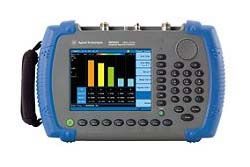
One of our popular products is the N9344C Agilent Handheld Spectrum Analyzer (HSA), 20 GHz. This handheld analyzer is a powerful tool that offers a wide frequency range of up to 20 GHz. Its portability makes it ideal for field observations, allowing astronomers to take measurements in remote locations. The N9344C provides high - resolution spectral analysis, enabling users to detect even the faintest spectral features.
Another excellent option is the N9915A Agilent FieldFox Handheld Microwave Analyzer, 9 GHz. This analyzer combines spectrum analysis with other measurement capabilities, such as network analysis. With a frequency range of up to 9 GHz, it is well - suited for studying microwave emissions from stars and other celestial objects. The FieldFox is known for its rugged design and user - friendly interface, making it easy to operate in challenging environments.
For more comprehensive and laboratory - based measurements, we recommend the 8565EC Agilent Spectrum Analyzer 9 KHz - 26.5 GHz. This analyzer offers a wide frequency range from 9 KHz to 26.5 GHz, providing detailed spectral information across a broad spectrum. It is equipped with advanced features for signal analysis, such as high - speed data acquisition and sophisticated display options.
Commercial and Scientific Applications of Spectrum Analyzers
Apart from stellar research, our spectrum analyzers have a wide range of commercial and scientific applications. In the telecommunications industry, spectrum analyzers are used to monitor and analyze the radio frequency spectrum. They help ensure that wireless communication systems operate efficiently and without interference. By analyzing the spectral characteristics of signals, engineers can optimize the performance of cellular networks, Wi - Fi systems, and satellite communication links.
In the field of aerospace and defense, spectrum analyzers are used for electronic warfare, radar testing, and electromagnetic compatibility (EMC) testing. They can detect and analyze the signals emitted by enemy radar systems, helping military forces develop countermeasures. EMC testing is essential to ensure that electronic devices on aircraft and other military equipment do not interfere with each other.
Contact Us for Your Spectrum Analyzer Needs
If you are involved in stellar research, telecommunications, aerospace, or any other field that requires accurate spectral analysis, our spectrum analyzers are the perfect solution. We are committed to providing high - quality products and excellent customer service. Whether you need a handheld analyzer for fieldwork or a laboratory - grade analyzer for comprehensive research, we have the right product for you.

Contact us today to discuss your specific requirements and start the procurement process. Our team of experts is ready to assist you in selecting the most suitable spectrum analyzer for your needs and providing you with all the necessary technical support.
References
- Carroll, B. W., & Ostlie, D. A. (2007). An Introduction to Modern Astrophysics. Addison - Wesley.
- Ryden, B. S., & Peterson, B. M. (2017). Foundations of Astrophysics. Cambridge University Press.